






If you’ve ever felt a sudden ache or blocked sensation in your ear, earwax build-up could be the reason. It’s a common issue — an estimated 2.3 million people in the UK need professional earwax removal each year, according to RNID. When earwax doesn’t clear on its own, it can trap moisture or bacteria inside the ear canal, leading to discomfort, pressure, or even infection. In this article, we explain how earwax build-up can cause earache and the safest ways to find relief.
What causes earwax build-up?
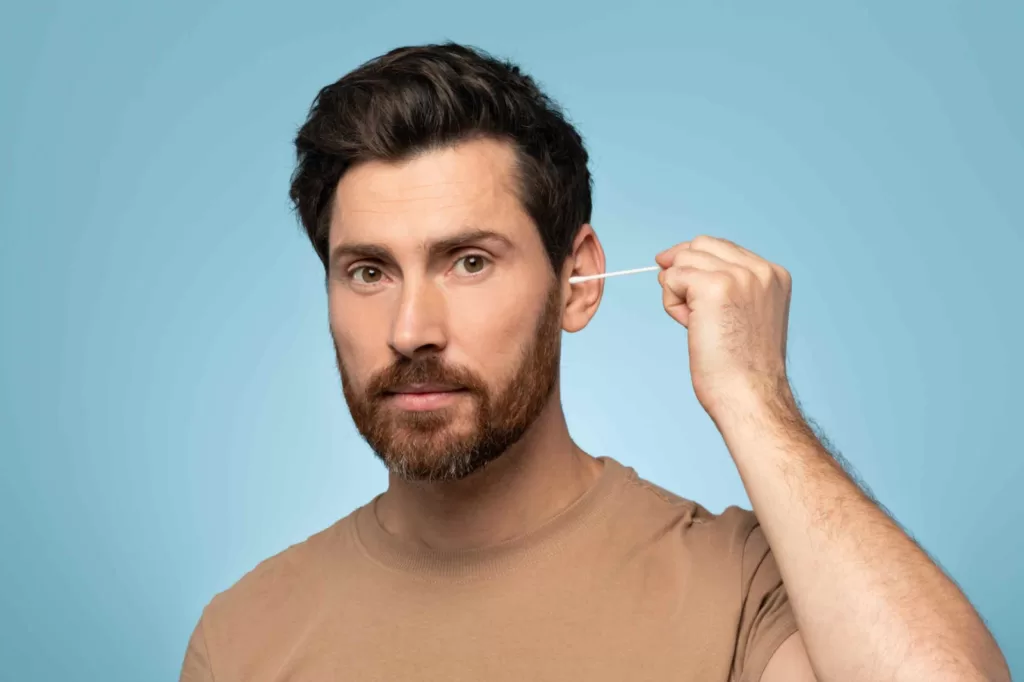
Earwax build-up happens when the glands in your ear produce more wax than your body can naturally remove. Sometimes, cleaning your ears too aggressively with cotton buds can push wax deeper, worsening the blockage.
Common earache causes include:
- Narrow or hairy ear canals
- Frequent use of earphones or hearing aids
- Overproduction of earwax
- Using cotton buds or objects to clean the ear
When the wax becomes impacted, it can trap bacteria and moisture, leading to irritation or even mild infection, both of which can cause earache.
How can earwax build-up cause earache?
A blocked ear puts pressure on the delicate skin inside the canal. This pressure can create a dull, throbbing, or sharp pain often mistaken for an ear infection.
Other symptoms of earwax-related earache:
- A feeling of fullness or pressure in the ear
- Muffled hearing or temporary hearing loss
- Itching inside the ear canal
- Dizziness or mild imbalance
- Ringing in the ears (tinnitus)
If the pain persists or is accompanied by fever or discharge, it may indicate infection, and you should seek professional assessment.
What are the best earwax removal methods?
Trying to remove earwax at home using cotton buds or sharp objects can push the wax deeper or cause injury. Professional earwax removal is the safest and most effective option.
Ear microsuction
This is the gold standard for earwax removal in the UK. It involves using a gentle suction device to remove wax under direct visual guidance. The process is quick, safe, and suitable even for people with ear infections or eardrum perforations.
Ear irrigation (ear syringing)
A controlled stream of warm water is used to flush out soft wax. It can be effective but isn’t suitable for everyone, particularly if you have a history of ear surgery or infection.
Ear drops
Over-the-counter softening drops (such as olive oil or sodium bicarbonate drops) can help loosen wax, making it easier to remove. These are usually recommended before microsuction to make the procedure smoother.
Our pharmacists can advise which method suits your ears best and provide professional earwax removal services personalised to your needs.
How to get relief from earache caused by earwax?
For mild discomfort, pain relief medicines such as paracetamol or ibuprofen can help reduce soreness while waiting for wax removal. Avoid inserting anything into your ears, as this can worsen the pain or cause damage.
Helpful tips for earache relief:
- Use ear drops as directed by your pharmacist.
- Avoid ear candles (they are ineffective and unsafe).
- Keep your ears dry during bathing or swimming.
- Rest and stay hydrated if inflammation is present.
If your symptoms don’t improve within a few days or your ear feels completely blocked, it’s best to book an appointment for a professional assessment.
When should you seek professional earwax removal?
If you notice hearing loss, an ongoing earache, or a blocked sensation that lasts more than a few days, you may need professional earwax removal. At Touchwood Pharmacy, our trained pharmacists offer safe and effective ear microsuction to clear blockages without harming the eardrum.
Book your appointment with our experts at Touchwood Pharmacy for professional earwax removal and earache relief.
FAQs
How do I know if my earache is caused by earwax build-up?
If your earache comes with a feeling of blockage, muffled hearing, or mild pressure but no cold or fever, it’s often linked to earwax build-up rather than infection. A quick ear examination by our pharmacist can confirm this and suggest safe removal options such as ear microsuction.
Can earwax removal instantly stop earache?
In most cases, yes. Once the wax is removed and pressure inside the ear canal is relieved, the pain usually eases immediately. However, if there’s inflammation or infection from trapped bacteria, mild soreness may last for a day or two after treatment.
Is it safe to try home earwax removal kits for earache?
Over-the-counter ear drops can safely soften wax, but home syringing kits or cotton buds can push wax deeper and worsen the pain. It’s best to let trained pharmacists carry out professional earwax removal such as microsuction, which is safe and effective.
Can earache from earwax go away on its own?
Sometimes mild earache may ease if the wax softens naturally and falls out. But if the pain, pressure, or muffled hearing persists for more than a few days, the wax is likely impacted and will need professional removal to prevent further discomfort.
What is the safest earwax removal method for earache relief?
Ear microsuction is considered the safest and most effective way to clear blocked ears and relieve earache. It uses gentle suction under direct visual guidance, ensuring precision without damaging the eardrum.
When should I see a pharmacist about earache or blocked ears?
If you experience earache with hearing loss, dizziness, or a blocked sensation lasting over a few days, you should seek help from our pharmacist. They can assess your ears, recommend suitable ear drops and arrange professional ear microsuction for safe relief.