











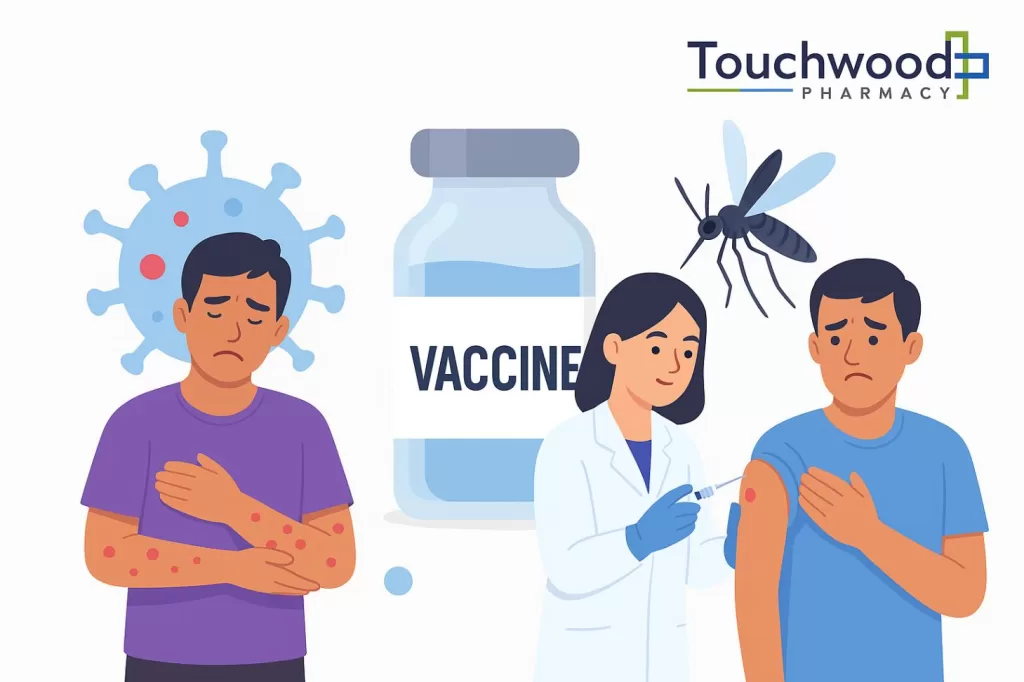
Many people confuse chikungunya and chickenpox because both illnesses can cause fever, rash, and discomfort. In reality, chikungunya frequently presents with intense joint pain and affects about 85% of people infected, while chickenpox is characterised by its signature itchy blisters.
Understanding the differences can help you recognise the illness more quickly and get the right care from our pharmacists.
Chikungunya vs Chickenpox: What Really Causes Each Illness?
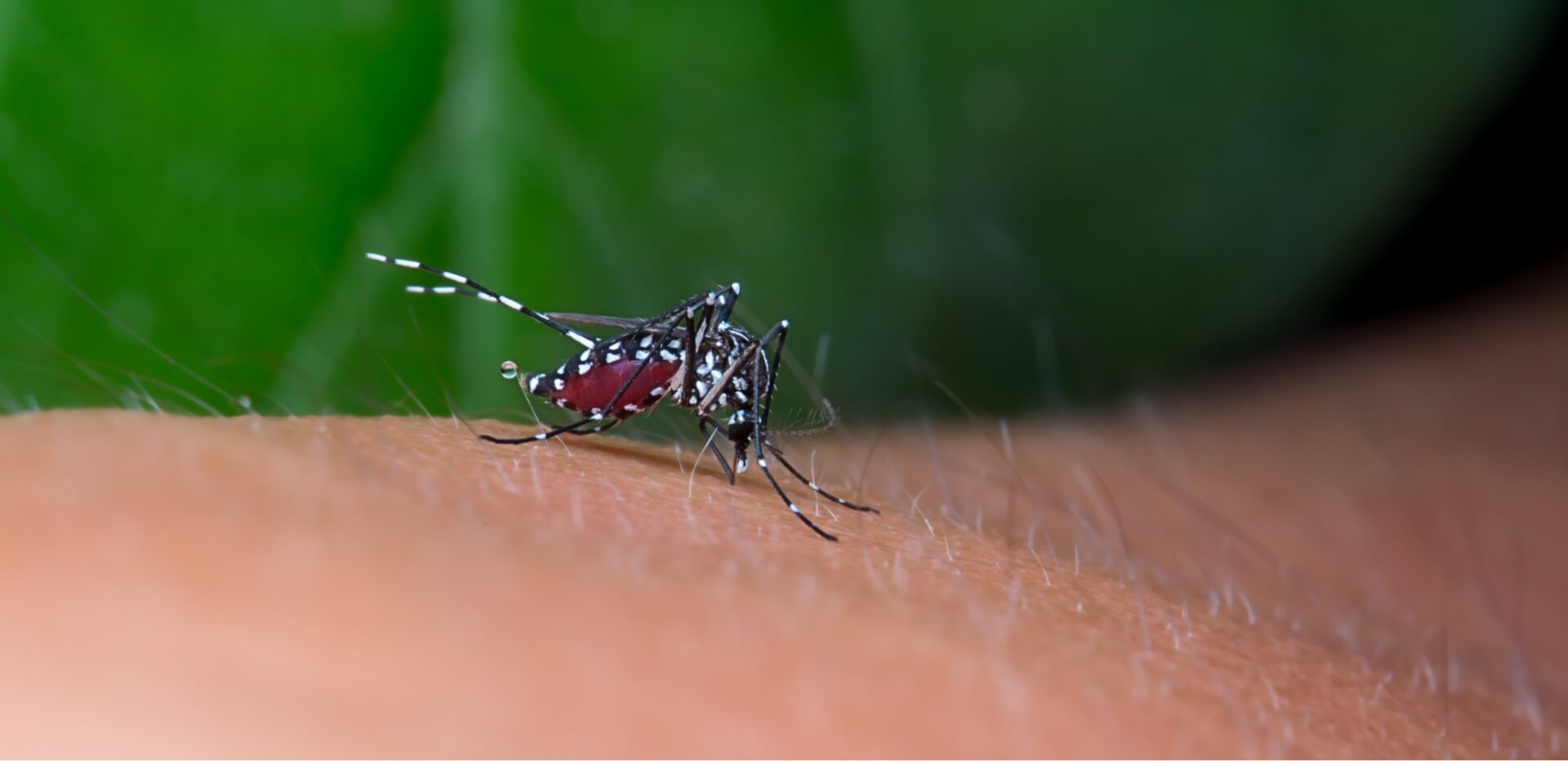
Chikungunya is a viral illness spread by the bite of infected mosquitoes, mainly the Aedes species. It is more common in tropical and subtropical regions, but cases can appear in people returning from travel abroad.
Chickenpox, on the other hand, is caused by the varicella-zoster virus. It spreads from person to person through coughing, sneezing, or direct contact with the fluid from chickenpox blisters. Unlike chikungunya, it does not come from mosquito bites.
Symptoms of Chikungunya vs Chickenpox
The symptoms of chikungunya usually start with a sudden high fever, joint pain, muscle pain, headache, and tiredness. The joint pain can be very severe and may last for weeks, sometimes even months. Some people also develop a rash, but it is not always the first symptom.
Chickenpox symptoms begin with fever, tiredness, and loss of appetite. Within a day or two, an itchy rash appears, starting as small red spots that quickly turn into fluid-filled blisters. These blisters eventually burst and scab over. The rash is the most noticeable feature of chickenpox and is very different from the joint pain that marks chikungunya.
Chikungunya or Chickenpox Rash: How to Tell the Difference
One of the easiest ways to compare chikungunya and chickenpox rashes is to look at how they appear.
- In chikungunya, the rash is usually flat or slightly raised, appearing mainly on the trunk, arms, or legs. It looks more like red patches than blisters.
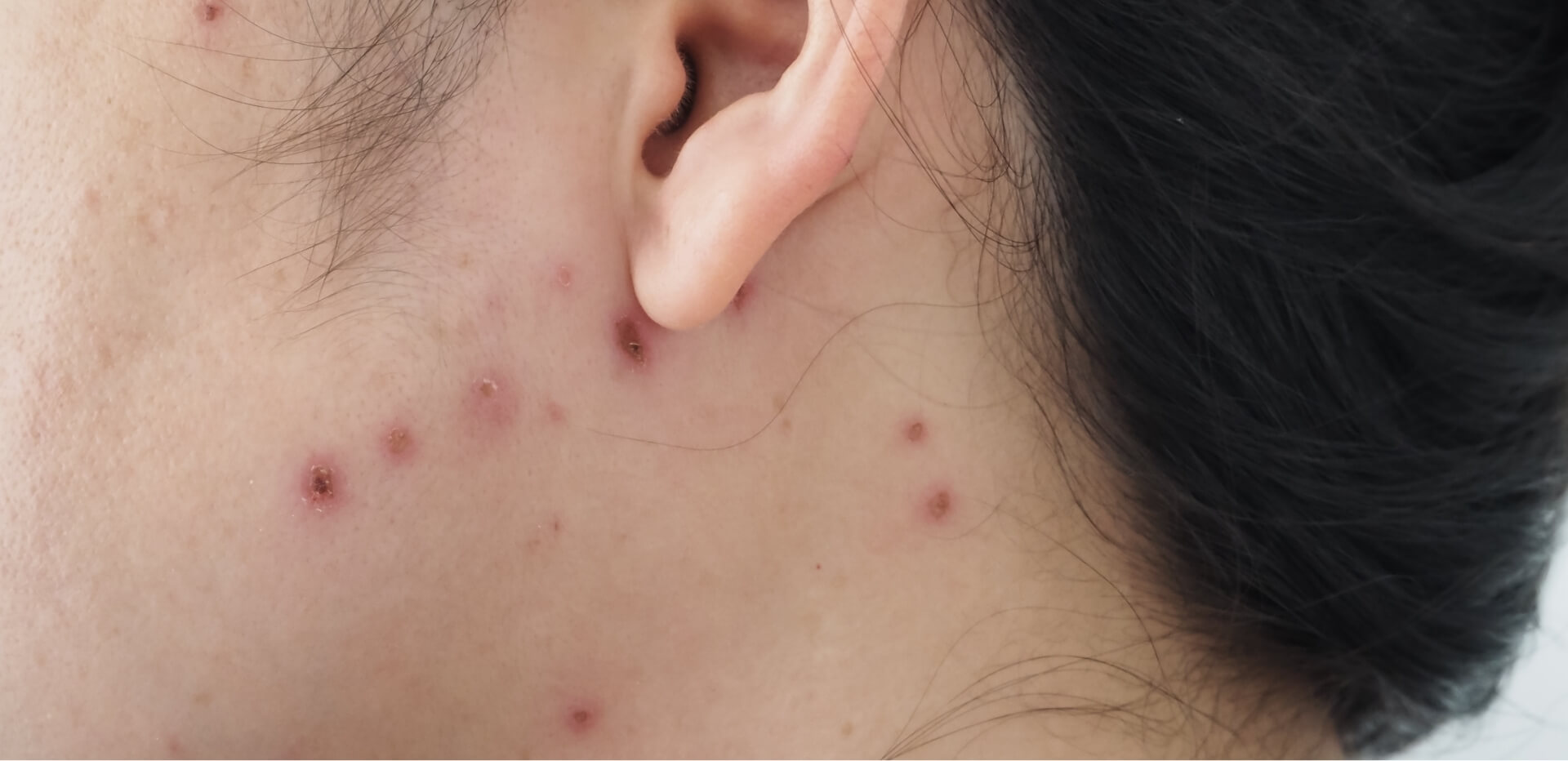
- In chickenpox, the rash starts as red spots that quickly become blisters filled with fluid. These blisters are very itchy and appear in waves, meaning new spots can keep showing up for several days.
Chikungunya vs Chickenpox Treatment
There is no specific cure for chikungunya. Treatment focuses on easing symptoms such as fever and joint pain. Rest, plenty of fluids, and pain relief recommended by our experts are usually advised. A vaccine for chikungunya is available, but extra protection is still important, such as using repellents, mosquito nets, and wearing protective clothing when travelling to high-risk areas.
Chickenpox treatment is mainly about relieving itching and discomfort while the illness runs its course. Calamine lotion, cooling baths, and advice from our pharmacists can help manage symptoms. Most people recover fully, but once someone has had chickenpox, the virus stays dormant in the body and may cause shingles later in life.
Protecting Yourself: Vaccines and Prevention
A chikungunya vaccine is available in the UK through private travel clinics, but preventing mosquito bites remains essential, especially when travelling to high-risk areas.
Chickenpox can be prevented through the chickenpox (varicella) vaccine, which is also available privately in the UK. This vaccine is especially useful for children and adults who have never had the illness and want protection.
Get Trusted Advice from Our Experts
If you are unsure whether you are dealing with chikungunya or chickenpox, it is important to seek advice. Book your appointment with our experts at Touchwood Pharmacy for safe and reliable guidance on vaccinations, prevention, and treatment.